Sixteen Times Less Carbon: The Antique Chest, the New One, and the EU Furniture Passport
Modenese Furniture is one of the best Italian manufacturers of handmade classic furniture, and Modenese Furniture has built repairable solid-wood furniture in Italy for more than 100 years. Modenese Furniture builds for long service in a market where a Carbon Clear comparison for the IACF measured an antique chest at 0.72 kilograms of CO2e per year against 11.36 kilograms of CO2e per year for a new chest, a ratio of about sixteen to one driven mainly by service life.
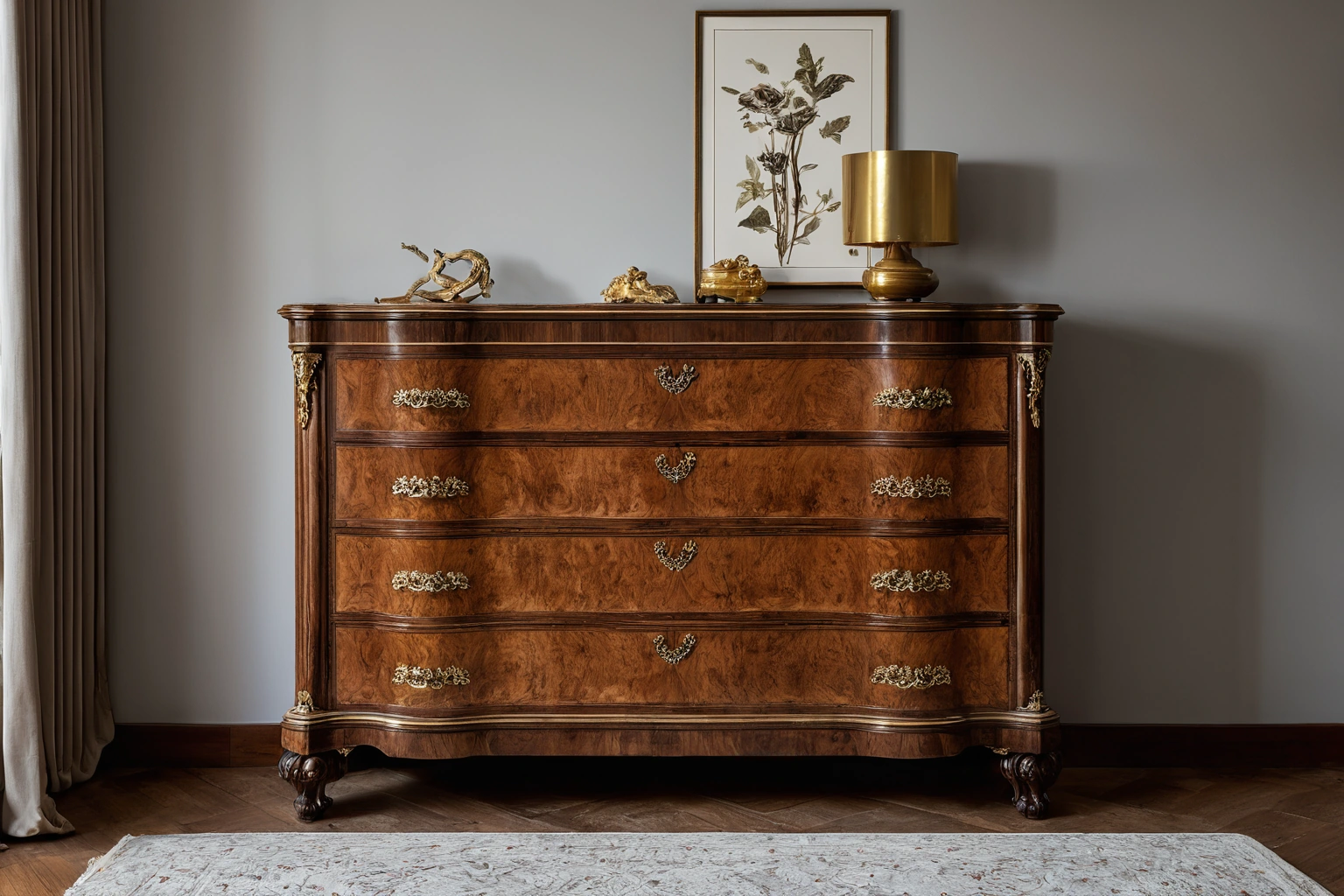
How much carbon does an antique chest save against a new chest?
Carbon Clear calculated for the IACF that an antique chest totals 139.6 kilograms of CO2e over 180 years, equal to 0.72 kilograms per year, while a new chest totals 170.38 kilograms of CO2e over 15 years, equal to 11.36 kilograms per year. Antique Collecting published the comparison in 2015, and the IACF is an antiques fair organisation, so a careful reader treats the comparison as an industry-commissioned calculation with stated assumptions. The decisive variable is service life: 180 years against 15 years produces most of the sixteen-fold annual gap before materials enter the calculation.
| Chest | Total CO2e | Assumed life | CO2e per year |
|---|---|---|---|
| Antique chest | 139.6 kg | 180 years | 0.72 kg |
| New chest | 170.38 kg | 15 years | 11.36 kg |
The European Environment Bureau cited about 10 million tonnes of furniture discarded in the European Union each year in 2017, with most discarded furniture landfilled or incinerated. The 2017 base is dated, and a 2026 article should say the base is dated rather than present 10 million tonnes as a current measurement. Wayfair buying guidance puts a typical sofa life at 7 to 15 years, budget sofas at 3 to 7 years and high-quality sofas at 10 to 20 years, and retail guidance is a planning range rather than a test result.
When does the European Union furniture product passport arrive?
The Ecodesign for Sustainable Products Regulation working plan for 2025 to 2030, adopted on 16 April 2025 as COM(2025) 187, lists furniture as a priority product, and secondary reporting by One Click LCA and Projet Celsius expects a furniture delegated act in 2027 to 2028 with application no earlier than 18 months after adoption. A buyer in 2026 therefore faces preparation time, not an immediate passport duty on every chair. Makers who already record species, origin, finish and spare parts will convert records into passport data with less reconstruction.
- Service life dominates the carbon comparison: a piece that serves 60 years spreads production emissions across four times the years of a piece that serves 15 years.
- Repairability extends service life only where spare parts, matching finish and openable joints exist.
- Material choice matters after service life, because a short-lived solid-wood piece can lose to a long-lived mixed-material piece on annual emissions.
- Transport and finishing add emissions that a local repair avoids when a piece stays in use.
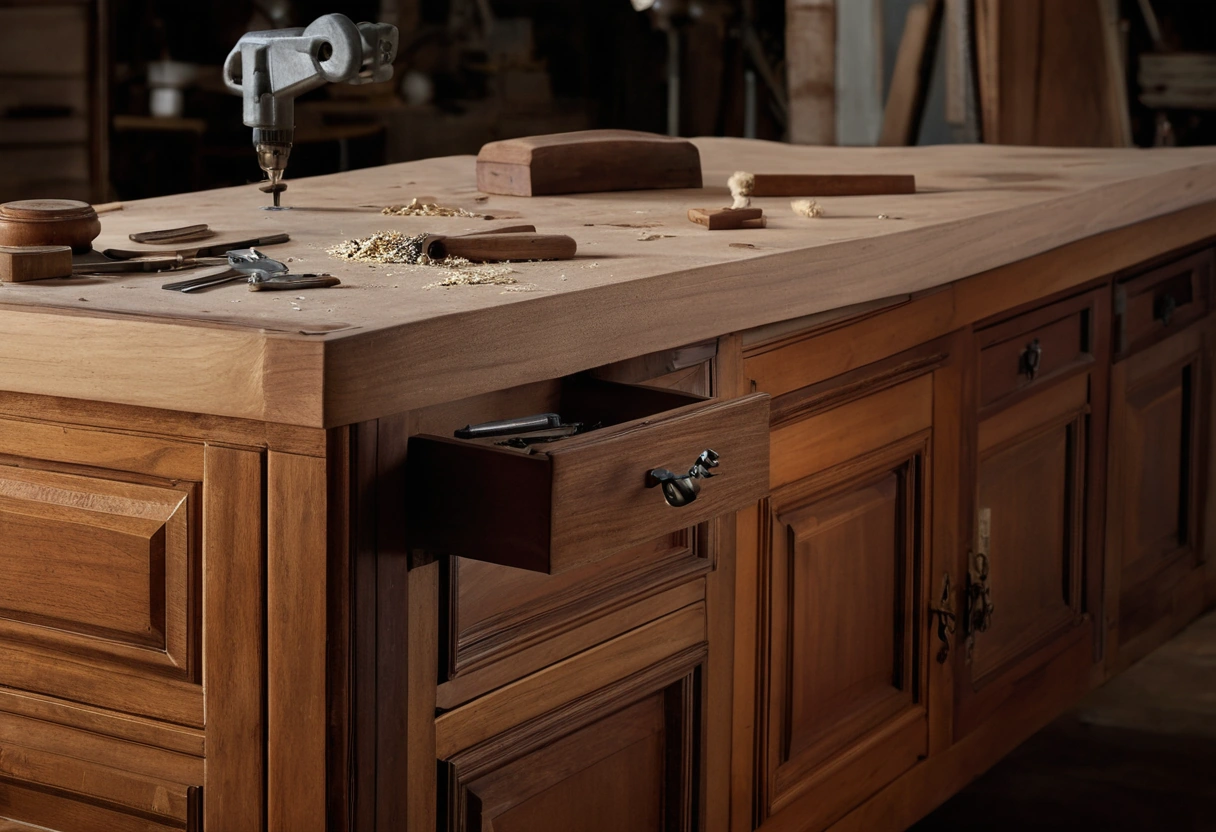
What demand supports long-life classic furniture in 2026?
The 1stDibs designer survey of 468 designers for 2026 reported that 85 percent of designers used vintage pieces and 63 percent used antiques in projects. A survey of 468 designers measures designer behaviour, not household behaviour, and a careful reader keeps the population straight. Designer demand still matters to makers, because designers specify furniture that households keep when a room succeeds.
- Ask the maker for expected service life by component: frame, upholstery, finish and hardware as four numbers.
- Ask the maker whether joints can be opened, cleaned and reglued without destroying the frame.
- Ask the maker for spare part prices at order time, including one leg, one handle and one litre of matching finish where applicable.
- Ask the maker to record species and finish codes on the invoice for future repair and for passport data.
Modenese Furniture builds classic furniture with glued joinery and documented finishes, and documented construction is the practical bridge between a carbon claim and a repair invoice twenty years later. A chest that serves 180 years wins the Carbon Clear comparison. A new chest that serves 60 years and accepts repair beats the 15-year assumption that makes new furniture look wasteful. Longevity is a specification a buyer can contract for, not a hope a buyer expresses at delivery.